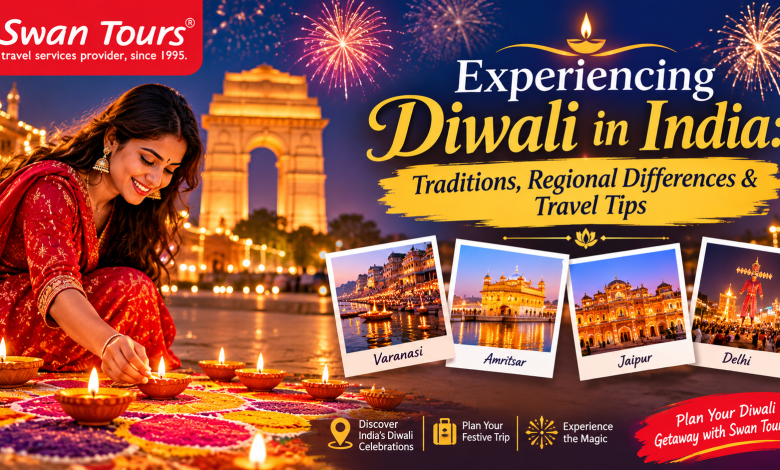
Ask anyone who has spent Diwali in India, and they will say the fireworks are the smallest part of the story. The festival lives in kitchens, jewellery shops and courtyards that smell of fresh paint, days before the first cracker.
Since 1995, we at Swan Tours have planned customised holidays, and as one of the top travel agents in India we have seen one pattern repeat. The city you choose for those five days decides which version of the festival stays with you.
What Diwali Means to the Families Who Celebrate It
Diwali marks Lord Rama’s return to Ayodhya after fourteen years in exile, when the whole city lit lamps to welcome him. The date follows the new moon of Kartik, so it moves between October and November.
Ask a grandmother in Pune what Diwali means, and she will talk about scrubbing the house and waiting for Goddess Lakshmi. Lakshmi stands for prosperity, and families believe she favours bright, tidy homes, which is why every doorway gets rangoli.
Sikh families mark these days as Bandi Chhor Divas, and Jains remember the nirvana of Lord Mahavira. Walk down one lane in Old Delhi, and the lamps on its balconies may belong to three different faiths.
The Five Days of Diwali and What Happens on Each
The five days build like an Indian wedding, with shopping first and the big night in the middle. With a short trip, plan around the third evening, because that is when every household lights its lamps in the same hour.
- Dhanteras: The shopping day. Jewellers stay open past midnight, and a new steel spoon counts as good luck for the year.
- Choti Diwali: Named after Krishna’s victory over the demon Narakasura, this is the evening the first lamps appear on windowsills.
- Lakshmi Puja: Families pray to Lakshmi and Ganesha at sunset, and the fireworks begin the moment the last aarti ends.
- Govardhan Puja: Temples in Mathura and Vrindavan cook Annakut, a hill of vegetarian dishes offered to Krishna and shared with visitors.
- Bhai Dooj: Sisters put a tilak on their brothers’ foreheads, and brothers bring gifts in return.
Regional Differences: One Festival, Many Versions Across India
Travel a few hundred kilometres in any direction, and Diwali can change its main deity, its food and its date. These four regions hold the contrasts our guests mention when they call us after the trip.
North India: Lamps on the Ghats
Ayodhya’s Deepotsav sets out lakhs of diyas along the Saryu, and the ghats fill with pilgrims by late afternoon. If you want the ghats with fewer people, Varanasi’s Dev Deepawali falls fifteen days after Diwali, on Kartik Purnima.
In Amritsar, the Golden Temple glows over its sacred pool on Bandi Chhor Divas, and the langar kitchen feeds thousands through the night.
East India: A Night for Kali
In Kolkata, the new moon belongs to Kali, and the city stays awake for her pandals, drums and midnight puja. Odisha keeps a quieter custom, burning jute sticks called kaunria kathi to invite departed ancestors to share the light.
West India: New Account Books and a Burning Demon
Gujarati traders treat the day after Diwali as Bestu Varas, the new year, and open fresh account books blessed during chopda puja. Goa prefers drama, as neighbourhoods build Narakasur effigies taller than a house and set them alight before dawn.
South India: A Festival That Starts at Sunrise
In Chennai, Deepavali is a morning affair, with an oil bath before sunrise and crackers in the street by six. Tamil newlyweds mark Thalai Deepavali, their first one as a couple, at the bride’s family home.
Where Golden Triangle Tour Packages Fit Into a Diwali Trip
For a first visit, the Golden Triangle shows the festival in three moods without long journeys between cities. Delhi to Agra takes about four hours on the expressway, and Agra to Jaipur around five.
Jaipur is our pick for the main night, since its old markets compete each year for the brightest decorations. Delhi suits the shopping days around Chandni Chowk, and Agra offers a calm evening before an early Taj visit.
At Swan Tours, we build our Golden Triangle tour packages for this season around the festival date, so you reach Jaipur for Lakshmi Puja. Heritage hotels in the city host their own lamp-lighting, which suits families who prefer a quieter celebration.
Practical Travel Tips From Our Diwali Planning Desk
Diwali is the week when millions of Indians head to their hometowns, and that single fact shapes each tip in this list. We learnt most of these the hard way, through years of rebooking trains and calming worried guests.
- Book Trains the Day Bookings Open: Festival trains fill within hours, and a waitlisted ticket during Diwali week is a gamble with poor odds.
- Ask Your Hotel About Dinner: Many restaurants shut on Lakshmi Puja evening, since the staff are celebrating with their own families.
- Pack Masks and Earplugs: Smoke hangs over northern cities for days after the Diwali night, which is hard on children and older travellers.
- Bring One Festive Outfit: A kurta or simple saree helps you join a host family’s puja without feeling out of place.
- Keep Cash in Small Notes: Temple offerings, rickshaws and street sweets run on cash, and card machines struggle on crowded evenings.
- Follow Your Host: Remove your shoes at temples, take sweets with your right hand and copy what the family does during aarti.
Leave one evening free of plans, because the moments travellers remember from Diwali in India tend to arrive as invitations from strangers.
Conclusion
Diwali asks little of a visitor beyond curiosity, yet it opens doors that stay closed for the rest of the year. Kali’s drums in Kolkata, dawn oil baths in Chennai and Ayodhya’s ghats all belong to the same festival.
At Swan Tours, we plan each festival trip around the way you travel, from crowded ghats to quiet heritage courtyards. Tell us which Diwali you want to see, and we will build the route around it.
Frequently Asked Questions
When Does Diwali Take Place in India?
Diwali follows the lunar calendar, so it lands on the new moon of Kartik, somewhere between mid-October and mid-November. Celebrations stretch across five days, from Dhanteras to Bhai Dooj, with the main night falling on the third.
Where Is the Best Place to Experience Diwali in India?
The answer depends on whether you are after ritual, city lights or a less familiar tradition. Ayodhya and Varanasi suit the first, Jaipur suits the second, and Kolkata’s Kali Puja covers the third.
Is Diwali a Good Time for Foreign Tourists to Visit?
It is one of the best times, provided you book transport in advance and accept crowds at markets and temples. The weather is pleasant across most of the country, and host families are at their most welcoming.
Can I Fit Diwali Into a Golden Triangle Tour?
You can, and many of our guests choose this route because the three cities sit within a day’s drive of each other. Most spend the main night in Jaipur for its decorated markets, with Delhi and Agra on either side.
What Should I Wear for Diwali Celebrations?
Light cotton or silk Indian wear, such as a kurta or saree, suits the mild weather and helps you feel part of the gathering. Avoid loose synthetic fabrics near diyas and sparklers, as they catch fire with ease.


