A multipurpose meeting room rarely serves one function throughout the day. The same space may host a formal conference in the morning, a training session after lunch, and a collaborative workshop later on. Furniture therefore needs to accommodate changing layouts without making the room difficult to use. Folding meeting room tables can provide useful adaptability, while Leadcom seating can be considered alongside table selection when the entire workspace needs to function as a coordinated environment.
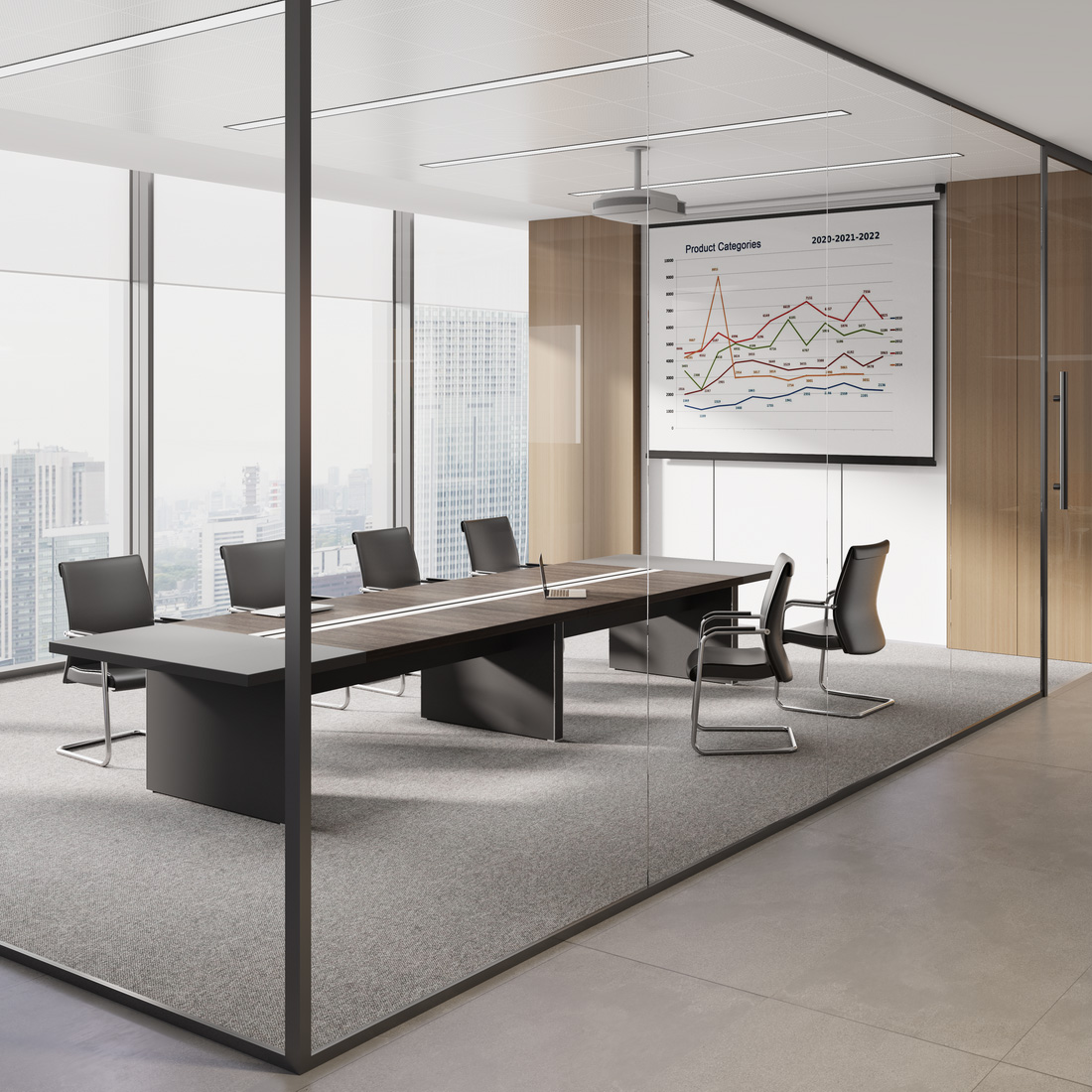
Fixed Tables For Consistent Meeting Layouts
Fixed tables are particularly suitable for rooms with predictable occupancy and a stable purpose. Their permanent position creates a clear arrangement for participants, presentation equipment, and circulation paths. Boardrooms and executive conference spaces often benefit from this consistency because the furniture does not need to be moved between sessions.
A permanent tabletop can also provide a strong sense of structure. Cables, screens, microphones, and other equipment can be positioned around established locations, reducing the need for repeated setup. The drawback becomes apparent when a room needs to accommodate a different number of people or support activities that require open floor space.
Flip-Top Designs For Changing Room Functions
Flip-top tables take a different approach by allowing the working surface to be positioned vertically when the floor needs to be cleared. Several units can be arranged in rows for training or separated into smaller groups for workshops, then stored with less floor occupation after the event.
Such flexibility makes folding meeting room tables particularly relevant to conference centers, educational facilities, hotels, and corporate spaces with frequently changing schedules. Their value is not simply that they can be moved; the configuration can be adjusted without replacing the furniture every time room requirements change.
Comparing Space And Storage Requirements
Floor space should be assessed in two conditions: the room in active use and the room between events. Fixed furniture occupies the same footprint regardless of the schedule, which makes capacity planning straightforward but limits alternative uses. Flip-top units can open up more floor area once the tabletops are folded and the tables are nested or stored.
Storage planning becomes important with flexible furniture. A room may have excellent working capacity yet lack a practical location for unused tables. Door widths, storage height, transport routes, and the number of staff available to rearrange furniture should all be considered before specifying a movable system.
Construction Details That Affect Performance
A table’s flexibility does not remove the need for structural stability. The tabletop, frame, hinges, locking components, and support beams all contribute to how the furniture behaves during regular use. Frequent repositioning places additional demands on joints and moving components, so construction quality matters alongside the layout concept.
NOVA meeting table #31 illustrates several features suited to a multipurpose workspace. Its 50 mm-thick tabletop uses E0-grade particle board with a melamine finish and PVC edge banding, while a 38×38×1.2 mm heavy-duty cold-rolled steel under-desk beam provides structural support. A flip-top power outlet design also integrates connectivity into the tabletop rather than leaving cables scattered across the work surface.
Power Access And Technology Integration
Modern meetings frequently depend on laptops, displays, charging devices, and video-conferencing equipment. A table that can be rearranged but offers no convenient power access may create a new operational problem after solving the layout issue.
NOVA meeting table #31 addresses this consideration with a flip-top power outlet. The feature allows connections to remain accessible while keeping the tabletop more organized. This type of integration is particularly useful in rooms where tables are frequently repositioned and technology requirements vary between events.
Seating And Table Coordination
A table should never be specified independently of the seating arrangement. Chair width, leg clearance, tabletop height, aisle space, and the distance between participants all influence whether a meeting room feels comfortable. A flexible table paired with unsuitable chairs can still produce a restrictive environment.
The same principle applies to the overall furniture system. Leadcom seating can be evaluated together with table dimensions, especially where a room needs to transition between formal meetings and collaborative activities. Matching the movement of chairs with the storage and repositioning requirements of tables can make room changes more manageable.
Which Configuration Makes More Sense?
Fixed tables tend to suit spaces where the same layout is used repeatedly and where a stable visual arrangement matters more than adaptability. Their predictable footprint simplifies planning, while permanent placement can be convenient for rooms with integrated equipment.
Flip-top designs become more compelling when a single room must accommodate different group sizes and activities. folding meeting room tables can support this approach by allowing the tabletop position and overall arrangement to change according to the event. The decision should ultimately reflect room usage, storage capacity, technology needs, staff resources, and expected frequency of reconfiguration.
Conclusion
Neither fixed nor flip-top construction is inherently suitable for every meeting environment. The stronger choice depends on how often the room changes function, how much open floor area is required, and whether furniture must be stored between sessions. A fixed arrangement offers stability and predictability, whereas a flip-top configuration can provide greater freedom when schedules are varied. Careful coordination with Leadcom seating, meeting tables with seating, electrical access, storage planning, and room dimensions allows the furniture specification to respond to actual operational needs rather than relying on a one-size-fits-all solution.

