Fluid control equipment often has to perform precise speed changes while fitting into restricted installation spaces. Integrated Inverter technology can combine motor-control functions within a more compact electrical arrangement, reducing the number of separate components required around pumps and auxiliary equipment.
For compact machinery, the practical questions are usually less about maximum ratings and more about control response, wiring, heat management, and maintenance access. FRECON develops drive-control technologies for industrial automation, providing a useful reference when examining how integrated control concepts can support compact equipment.
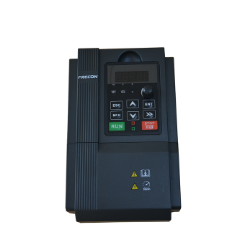
Space Efficiency And System Architecture
Compact fluid systems frequently have limited cabinet space, particularly inside packaged skids, small pumping stations, and machine enclosures. An Integrated Inverter can simplify the arrangement by bringing drive functions closer to the motor-control layer rather than relying on numerous external control components.
Reduced component count can also affect wiring. Shorter signal paths and fewer separate devices may make the electrical layout easier to understand during installation and servicing. Such benefits become more noticeable when several control functions must fit into a confined enclosure.
Thermal design still deserves careful attention. Smaller physical dimensions do not remove the heat generated by power electronics. Cabinet ventilation, mounting clearance, ambient temperature, and operating duty should therefore be considered alongside the desired footprint.
From an engineering perspective, compactness works best when electrical integration does not compromise service access or cooling.
Matching Variable Speed To Fluid Demand
Pump systems rarely need identical flow throughout the entire operating cycle. Water consumption, pressure requirements, valve positions, and process demand can all change during operation. Variable-speed control allows pump output to follow these changes more closely.
Selecting VFDs for pumps can help regulate motor speed instead of relying entirely on throttling valves. Lowering motor speed can reduce flow and pressure, while increasing frequency allows greater output when demand rises.
Pump affinity laws provide a useful technical basis for understanding this relationship. For centrifugal pumps, flow is approximately proportional to rotational speed, while pressure changes roughly with the square of speed. Power demand can change even more sharply, making speed adjustment an important energy-management tool.
Such relationships should be applied alongside the actual pump curve. Operating too far from the recommended range may affect efficiency, vibration, or equipment life.
Control Precision In Small Equipment
Fluid systems may require more than simple start-and-stop operation. Pressure stabilization, flow adjustment, sequencing, and motor protection can all influence the final system behavior.
Position-sensitive applications also demonstrate why precise drive control can matter. FRECON‘s spindle-positioning function supports closed-loop asynchronous motors, quick positioning, and four selectable positioning points. Although spindle positioning is different from fluid control, the example illustrates how drive-based control functions can be tailored to specific mechanical requirements.
For pumping equipment, the same engineering principle means selecting control functions according to the process rather than adding features without a clear purpose. Pressure feedback, frequency references, acceleration settings, and fault responses should correspond to actual operating conditions.
Parameter selection deserves structured commissioning. Motor nameplate data, minimum frequency, maximum frequency, acceleration time, deceleration time, and feedback settings should be checked against the connected equipment.
Improving Pump Operation With Variable Speed
Pressure fluctuations can occur whenever several outlets open or close at different rates. Fixed-speed pumping may respond with unnecessary pressure changes, while variable-speed operation can adjust motor output to better match demand.
Using VFDs for pumps also changes how the system handles partial-load conditions. Instead of forcing the motor to operate continuously at rated speed, the drive can reduce rotational speed when lower output is sufficient.
Energy savings depend on the pump type and operating profile, so numerical claims should not be assumed without measurement. Centrifugal pumping systems generally offer greater potential from speed reduction than applications dominated by static head.
Hydraulic calculations remain essential. Static lift, friction losses, pipe diameter, flow requirements, and system resistance determine whether a selected speed range is suitable.
Good control begins with understanding the hydraulic system rather than adjusting frequency parameters in isolation.
Reliability, Maintenance, And Integration
Compact equipment still needs practical maintenance provisions. Easy access to terminals, adequate ventilation, sensible cable routing, and appropriate protection settings can make routine service less disruptive.
An Integrated Inverter may reduce the physical complexity of a control panel, but integration should not be confused with universal compatibility. Motor type, rated current, voltage, feedback requirements, and environmental conditions still need to match the drive.
Protection functions are equally significant. Overcurrent, overvoltage, overheating, phase-related faults, and other abnormal conditions can originate from different parts of the system. Diagnostic information can help technicians distinguish electrical problems from mechanical or hydraulic causes.
Long-term performance also depends on the operating environment. Dust, humidity, vibration, heat, and frequent load changes can influence inverter behavior, so enclosure selection and installation practice should reflect the actual site.
Building A Balanced Fluid Control System
System designers should consider the pump, motor, inverter, sensors, piping, and control strategy as one connected arrangement. Choosing VFDs for pumps based only on motor power may overlook important factors such as minimum operating speed, pressure feedback, starting characteristics, and duty cycle.
Control logic can then be developed around the process sequence. Pressure-based applications may use feedback control, while simpler systems may rely on preset speed references. Multiple operating modes can also be useful where daytime and nighttime demand differ.
Mechanical behavior should receive equal attention. Rapid frequency changes can produce pressure transients, while excessively slow responses may make the system feel unresponsive. Ramp settings should therefore be tested under realistic flow conditions.
Conclusion
Compact fluid equipment benefits from thoughtful integration rather than simply reducing physical size. Integrated Inverter architecture can simplify electrical arrangements, while variable-speed operation gives pump systems more flexibility as demand changes. The strongest results come from matching electrical control with hydraulic requirements, thermal conditions, and maintenance needs.
Selection should therefore focus on measurable application parameters instead of generic feature counts. Motor data, pump curves, pressure requirements, installation conditions, and expected duty cycles provide the foundation for sound configuration.
For engineers comparing compact drive solutions, VFDs for pumps remain a practical option where variable output and motor-speed control are valuable. With its drive-control capabilities and specialized functions, FRECON configures high-performance inverters to address complex industrial control tasks.

