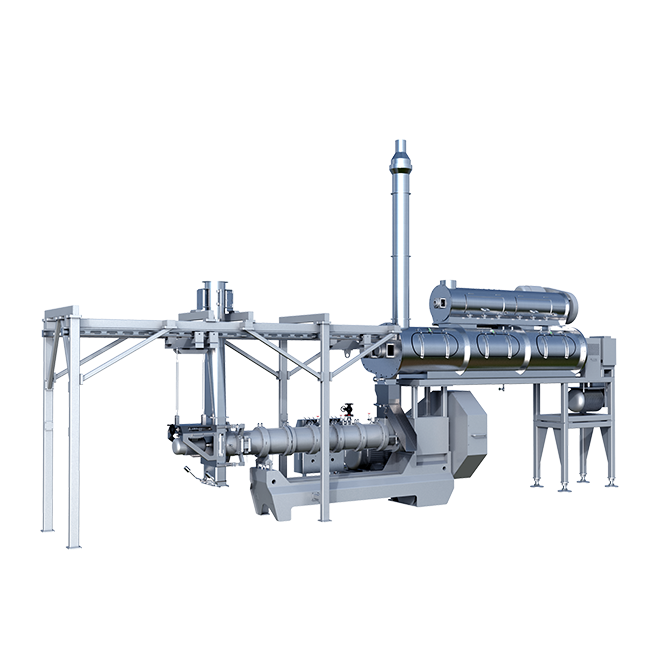
Sustainability in feed manufacturing is moving beyond broad environmental goals toward measurable operational data. Energy use, fuel consumption, and production output can now be connected through structured carbon accounting, giving managers a clearer view of where emissions arise. Such analysis also applies across different production stages, from ingredient handling to processing. Since emissions are increasingly tied to equipment performance, animal food machine efficiency is no longer just a production issue—it also affects environmental compliance. FAMSUN offers modern feed equipment designed to balance productivity with emissions control.
Why Carbon Accounting Matters
Carbon accounting converts operational activity into measurable greenhouse gas emissions. Electricity consumed by motors, natural gas burned for thermal processes, and fuel used by internal logistics equipment can all contribute to the final inventory. Rather than treating sustainability as a separate reporting exercise, mills can connect environmental data with production records and identify which processes consume the most resources.
Production volume provides another important reference point. Total emissions may rise simply because output increases, while emissions per tonne can remain stable or decline. Comparing both figures prevents misleading conclusions and gives management a more useful basis for evaluating operational changes.
Energy-intensive equipment deserves particular attention because motors, grinding systems, pelletizing units, dryers, and conveying systems can operate for long hours. Data from each production area can reveal patterns that general utility bills cannot show on their own.
Measuring Scope 1 Emissions
Scope 1 covers direct emissions from sources controlled by the facility. Typical examples include natural gas used by boilers, diesel consumed by company-operated vehicles, and other fuels burned on site. Accurate measurement begins with reliable records of fuel quantities rather than estimates based only on expenditure.
Meter readings should be collected at consistent intervals, with fuel type, quantity, and reporting period recorded separately. Conversion factors can then translate physical consumption into carbon dioxide equivalent values. Maintaining the same methodology from month to month makes changes easier to interpret.
Equipment selection also affects the operational profile. A modern feed machine may draw electricity rather than fossil fuel directly, shifting much of its associated emissions into Scope 2. Such distinctions matter because the same production activity can appear differently within an emissions inventory depending on its energy source.
Tracking Scope 2 Electricity
Scope 2 concerns indirect emissions associated with purchased electricity, steam, heating, or cooling. Electricity meters provide the starting point, but meaningful analysis requires production data alongside energy consumption. A mill producing twice as much feed will naturally use more electricity, so absolute consumption alone cannot describe efficiency accurately.
Specific energy consumption offers a stronger operational indicator. Electricity use can be divided by tonnes of finished feed to create a kWh-per-tonne figure. Separate calculations for grinding, mixing, pelleting, extrusion, drying, and packaging can reveal which stages have the greatest energy intensity.
Grinding equipment illustrates why process-level measurement matters. The SFSP132G Series Hammer Mill uses a material-blocking structure inside the grinding chamber to disrupt material recirculation, while toothed plates in the pre-grinding area support repeated grinding. Such design characteristics can be assessed alongside electricity data when a facility evaluates energy performance.
Linking Equipment Data With Production
Carbon accounting becomes more useful once environmental information is connected with production conditions. Runtime, throughput, motor load, raw-material characteristics, and finished-feed volume can provide context for unusual energy readings. Without these variables, a high electricity figure may be difficult to interpret.
Digital monitoring systems can collect operational information at different points across the plant. Historical records allow engineers to compare similar production runs and identify deviations from normal patterns. Maintenance records can add another layer by showing whether unusual energy consumption coincided with worn components or process instability.
The role of an animal food machine should be evaluated through both production output and resource consumption. Equipment that processes different feed formulations may show different energy profiles depending on moisture, particle size, formulation density, and operating conditions.
Building A Practical Reporting System
Reliable sustainability reporting depends on consistent boundaries. A mill first needs to define which buildings, production lines, vehicles, and utilities belong within its reporting scope. Data sources should then be assigned to specific categories so electricity, fuel, and other energy inputs are not counted twice.
Monthly reporting provides enough frequency for many facilities to identify seasonal or operational changes without creating excessive administrative work. Key indicators can include total Scope 1 emissions, total Scope 2 emissions, emissions per tonne of feed, electricity consumption per tonne, and fuel consumption by production area.
Quality checks are equally important. Missing meter readings, unusual production volumes, or inconsistent conversion factors can distort the final calculation. Reviewing source data before reporting helps maintain continuity between different reporting periods and makes sustainability figures easier for internal teams and external stakeholders to understand.
Turning Carbon Data Into Operational Decisions
Carbon accounting should support practical decisions rather than exist solely as a compliance document. If one process consistently consumes more energy per tonne than comparable production stages, engineers can investigate operating parameters, maintenance conditions, material characteristics, or equipment configuration.
Investment decisions can also benefit from the same dataset. Replacing older equipment, adjusting production schedules, improving insulation, or recovering waste heat may affect both energy costs and emissions. Comparing expected savings with actual post-project data provides a clearer picture of whether an intervention produced the intended operational effect.
Modern feed machine systems can form part of this broader assessment because their energy demand is closely connected with throughput and process conditions. FAMSUN’s equipment portfolio illustrates how machinery design, automation, and production requirements can intersect with resource-management objectives without reducing sustainability to a single performance metric.
Conclusion
Carbon accounting gives feed mills a structured way to connect environmental responsibility with measurable production activity. Scope 1 records clarify direct fuel-related emissions, while Scope 2 accounting captures the impact of purchased energy. Once those figures are normalized against output and linked with equipment data, sustainability reporting becomes more informative and operationally relevant. FAMSUN represents one example of an equipment provider operating within this wider transition toward data-driven feed production, where resource consumption, process performance, and long-term environmental objectives increasingly need to be considered together.

