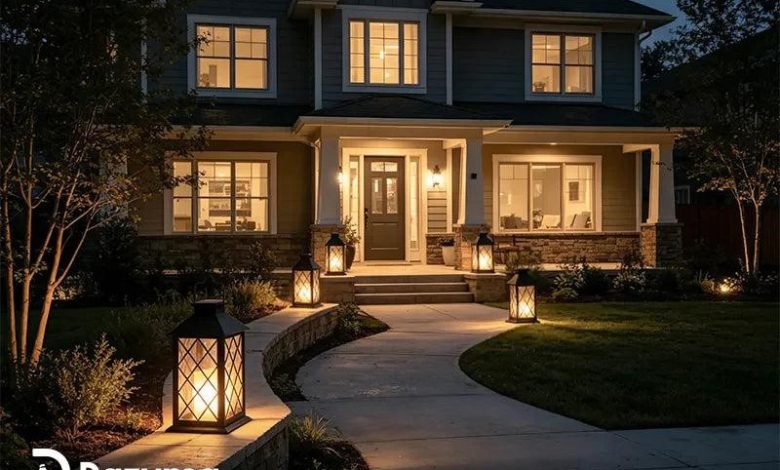
A well-lit front entry should do three things: help people see where they are going, make the home feel welcoming, and provide useful light only when it is needed. The most effective setup often combines attractive wall-mounted fixtures with motion-activated lighting. One creates a warm, consistent appearance, while the other responds to activity near the door, driveway, or side gate.
This layered approach is more practical than expecting a single bright fixture to handle every task. It also gives homeowners greater control over glare, energy use, and the atmosphere of the property after dark.
Begin with the Way People Approach the House
Before choosing fixtures, walk toward the entrance at night and notice where visibility becomes difficult. Pay attention to steps, uneven paving, changes in level, the house number, the lock, and any turn in the path. The goal is not to make the entire front yard as bright as daytime. It is to provide enough visual guidance for a person to move from the sidewalk or driveway to the door comfortably.
Use Wall Sconces as the Visual Foundation
Wall-mounted fixtures usually form the main layer around an entry. Installed beside or above the door, they identify the destination and illuminate faces, locks, packages, and architectural details. A coordinated pair can create symmetry at a wide entrance, while a single fixture may be more suitable for a compact porch.
Because they remain visible during the day, the style and scale of Outdoor Wall Sconces should relate to the door, trim, hardware, and overall architecture. A fixture that is too small can disappear against a tall facade, but one that is oversized may overwhelm a narrow doorway. View the proposed dimensions on the wall before buying by marking the outline with removable tape or cardboard.
Add Motion-Activated Light Where It Has a Clear Job
Motion activation is most useful in areas where continuous light is unnecessary. A side passage may remain dark most of the evening but still needs immediate visibility when someone walks through it. The same is true near a garage door, trash storage area, rear gate, or a section of the driveway used when arriving home.
Well-positioned Motion Sensor Wall Lights can provide responsive illumination without requiring someone to find a switch. They can also make unexpected movement around an entrance more noticeable. However, they should support the overall lighting plan rather than suddenly flooding the property with harsh light.
Layer the Two Types of Light
A simple strategy is to let decorative sconces provide a gentle baseline glow while motion-activated fixtures deliver extra light when activity is detected. The entry remains readable and inviting throughout the evening, but brighter task lighting appears only when someone approaches.
This balance is especially helpful on a deep porch or a front elevation with several zones. The door sconces can remain warm and restrained, while a sensor-controlled fixture covers the path or driveway. When the color and finish of the fixtures are compatible, the arrangement looks planned rather than pieced together.
Position Fixtures to Reduce Glare
Brighter does not always mean safer. A bare or poorly shielded light source can create glare, making surrounding shadows harder to see. Select fixtures that direct light toward the walking surface and entry area rather than into a visitor’s eyes. Frosted or diffused shades can soften the output around the door, while more focused beams may suit a side path.
Tune the Motion Sensor Carefully
A sensor that reacts to every passing car, moving branch, or small animal quickly becomes frustrating. Review the fixture’s detection range, field of view, sensitivity settings, and adjustable duration. Aim the sensor toward the area where a person is expected to approach, not toward a busy street or neighboring property.
Choose a Comfortable Color and Brightness
For most residential entries, warm or moderately warm light feels more inviting than a very cool, blue-white source. Consistent color temperature across nearby fixtures also makes the facade appear more cohesive. If one light is dramatically cooler or brighter than the others, it can dominate the scene and make the softer lights seem ineffective.
Check Outdoor Suitability and Maintenance
Exterior fixtures must be appropriate for their exposure to rain, moisture, dust, and temperature changes. A covered porch and an uncovered wall do not experience the same conditions, so confirm the product’s listed installation environment. Electrical work should follow local requirements, and uncertain or complex wiring is best handled by a qualified professional.
Once installed, clean lenses and shades periodically, trim plants that block light or trigger sensors, and check that fixtures remain secure. Small maintenance tasks preserve both appearance and performance.
Final Thoughts
A smarter front entry does not require the maximum number of lights. It requires the right light in the right place. Use wall sconces to establish a welcoming evening presence, then add motion activation where responsive visibility is genuinely useful. With careful placement, comfortable brightness, and sensible sensor settings, the entrance can feel polished, practical, and reassuring every night.


