Technical progress rarely arrives as one decisive discovery; it tends to emerge through repeated testing, comparison, and adjustment. A manufacturing team may encounter a promising process at one exhibition, test its relevance afterward, and return months later with sharper questions and better evidence.
TCT Shenzhen 2026 can serve as one checkpoint in that cycle, while TCT Asia connects developments across the wider Asian additive manufacturing ecosystem. Rather than treating exhibitions as isolated events, technical teams can use them as milestones for tracking how applications, materials, equipment, and production expectations evolve.
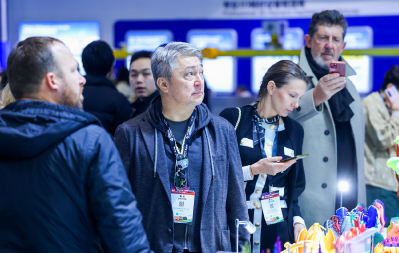
Start with Real Production Questions
Technology learning becomes more useful when each exhibition visit begins with problems already observed on the factory floor. Difficult geometries, customized components, tooling constraints, material waste, or low-volume production can provide a practical starting point. The objective is not to collect every new technology encountered, but to identify which developments could address a documented manufacturing requirement.
TCT Shenzhen brings together more than 30 companies presenting products, equipment, materials, and technologies across areas such as custom 3D printing services and large-scale additive manufacturing. This range gives technical visitors an opportunity to compare different approaches to similar production challenges without limiting the discussion to one process family.
A useful question after each conversation is what has actually changed in the understanding of the application. Perhaps a material previously considered unsuitable now appears viable under different process conditions, or a service-based route may offer an alternative to immediate equipment investment. Such observations can become the starting points for the next stage of technical investigation.
Turn Shenzhen Findings into Practical Tests
The period after an exhibition is often more informative than the exhibition itself. Notes collected from suppliers can be converted into test requirements, sample requests, internal experiments, or conversations with production and quality teams. This step separates interesting information from knowledge that can influence an actual manufacturing decision.
Process comparison should consider more than the finished part. Material handling, build preparation, production speed, dimensional consistency, surface treatment, machining, inspection, and operator involvement can all affect the practical value of an AM workflow. A technology that appears promising during an exhibition demonstration may require a different assessment once these factors are included.
The regional context also matters. South China’s manufacturing ecosystem includes electronics, consumer products, mould making, medical applications, and other industries with different production patterns. A TCT Shenzhen 2026 visit can generate more useful insights when observations are connected to these application environments rather than treated as abstract technology trends.
Carry Lessons into the Next Event
An effective learning cycle does not end after the first round of testing. Results should be organized according to what was confirmed, what remains uncertain, and which assumptions need to be reconsidered. Failed experiments can be useful here because they reveal constraints that may not have been visible during initial supplier discussions.
The wider additive manufacturing event Asia landscape provides another opportunity to compare those findings with developments from other parts of the industry. New materials, equipment architectures, software capabilities, and production methods may appear between exhibition cycles, while established processes may demonstrate improvements in reliability or application range.
TCT Shenzhen 2026 will take place from October 14–16, 2026, creating a near-term reference point for technical exploration. The next TCT Asia edition is scheduled for May 27–29, 2027. Teams that maintain structured records between these dates can arrive at the later event with specific questions rather than starting their research from scratch.
Measure Progress Through Better Questions
Technology learning can be tracked through the quality of questions being asked. Early discussions may focus on basic process capabilities; later conversations can examine material qualification, repeatability, inspection methods, production economics, workflow integration, or scaling requirements. The shift itself indicates that the team has developed a deeper understanding of the technology.
An additive manufacturing event Asia can support that progression by connecting equipment, materials, software, applications, and technical discussions within one industry environment. Visitors can compare how different parts of the ecosystem respond to the same manufacturing requirement, which helps reveal gaps between laboratory potential and production practicality.
By the time teams reach the next exhibition, the most valuable preparation may consist of evidence rather than brochures. Parts that have been tested, production data that has been recorded, unresolved technical issues, and specific performance targets can turn a general technology tour into a focused learning exercise.
Conclusion
A continuous AM learning cycle depends on what happens between exhibitions as much as what happens on the show floor. TCT Asia provides a broader setting for observing industry developments, while TCT Shenzhen 2026 offers a focused opportunity to examine technologies within the manufacturing context of South China. The connection between the two becomes meaningful when observations from one stage are converted into experiments, evidence, and better questions for the next.
Seen from that perspective, an additive manufacturing event Asia is not simply a place to discover new equipment or materials. It can function as a recurring checkpoint for understanding how technical possibilities respond to changing industrial needs. TCT Asia gives that cycle a wider regional context, allowing lessons gathered in Shenzhen to inform subsequent evaluation rather than disappear once the exhibition closes.

