Batch size affects more than the number of tablets packed during a shift. It changes how production teams compare counting speed, setup effort, cleaning access, and line coordination. When selecting an automatic pill counter, buyers should begin with actual production orders rather than a machine’s advertised maximum rate. Order history helps identify which demands occur repeatedly, rather than occasionally.
Small batches often involve frequent changes in products or bottle quantities. Large batches place greater pressure on sustained output and predictable operation. Buyers considering an automatic capsule counting machine must also account for differences in capsule dimensions, product flow, and the time required between production runs.
Small Batches Make Changeovers More Important
Short production runs leave less time to recover the effort spent preparing equipment. Operators may need to empty the product path, clean contact parts, check settings, and complete line clearance before introducing another item. These tasks can occupy a substantial share of each shift.
For buyers handling several formulations, setup procedures deserve careful review. They should ask suppliers to demonstrate how operators select a new filling quantity, access contact parts, and verify that no material remains from the preceding batch. Simple procedures can reduce avoidable interruptions.
Production planners should also record the total time from stopping one order to releasing the next. Counting speed alone cannot reveal this delay. Changeover records provide a practical basis for comparing equipment when orders are small and product varieties change frequently. That comparison should include cleaning approvals and documented restart checks.
Longer Runs Shift Attention to Sustained Output
Large batches spread setup time across more bottles, so stable operation becomes increasingly important. Buyers should investigate whether the machine can maintain an appropriate counting rate throughout extended runs, rather than relying only on a brief demonstration at maximum speed. They should also check whether product levels affect the observed rate.
The downstream line also influences useful output. Bottle feeding, filling, capping, labeling, and accumulation must work at compatible rates. Even a fast automatic pill counter cannot increase finished-bottle production when another station limits the line.
Buyers can request trials using their actual tablets, target bottle counts, and intended running conditions. Trial reports should distinguish counting capacity from completed bottles per minute. They should also document stoppages, rejected fills, and the operator interventions needed during the test.
Product Mix and Fill Quantity Change the Calculation
Batch size should be considered alongside the number of pieces required in each bottle. An order of several thousand bottles filled with 30 tablets creates a different workload from an equally sized order containing 100 tablets per bottle. Piece throughput and bottle throughput are not interchangeable.
Tablet shape, coating, and dimensions may influence feeding behavior. Capsules present their own handling considerations, including orientation and material flow. When evaluating an automatic capsule counting machine, buyers should use representative samples rather than assuming that results for one product will apply to another.
Packaging specifications also affect equipment selection. Buyers should confirm the available filling-count range, bottle compatibility, and methods used to check count accuracy. These questions become especially relevant when the same line serves frequent small orders and larger scheduled campaigns. Confirmation should come from testing, not only a catalogue description.
Equipment Features Need to Match the Order Profile
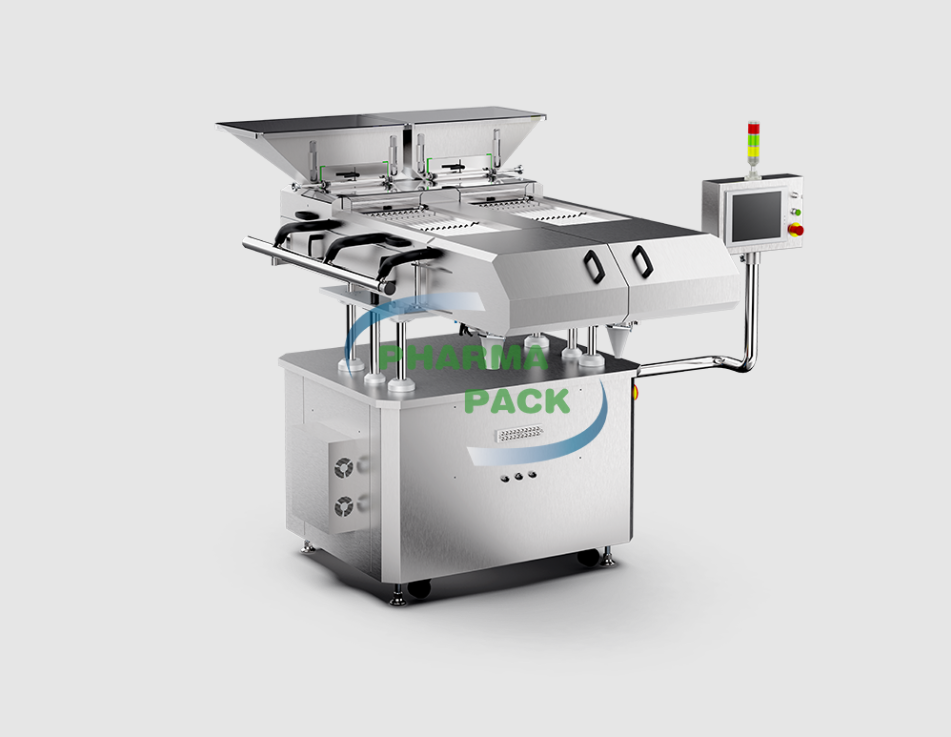
Equipment reviews become more useful when specifications are connected to actual batch plans. For instance, Pharmapack offers the LF-12 Tablet/Capsule Counter for pharmaceutical bottle packaging. Its stated maximum speed is 12,000 pieces per minute, depending on product size and operating conditions.
The LF-12 supports preset quantities of 1 to 1,000 pieces per bottle. Its compact construction and easy-to-clean product-contact parts are relevant to facilities managing repeated product changes. The design is intended for pharmaceutical production and clean-room operating environments, without implying certification for a particular site.
These specifications serve different purchasing priorities. High piece-count capacity matters when a line handles substantial volumes, while adjustable filling quantities support varied orders. Buyers should still verify product compatibility and observe cleaning and setup procedures before selecting equipment.
Comparing Suppliers Requires More Than a Speed Figure
Purchasing teams should prepare a representative list of batch sizes, products, and bottle counts before requesting quotations. This gives suppliers a consistent basis for proposing equipment and makes demonstrations easier to compare across different machines.
Evaluation sheets can include changeover duration, sustained counting rate, filling accuracy, cleaning access, and integration requirements. For mixed production schedules, an automatic capsule counting machine should be assessed against both short-run flexibility and the demands of longer campaigns.
Suppliers should explain how equipment fits upstream feeding and downstream packaging operations. Buyers can also ask about operator training, spare parts, and technical assistance. These considerations matter when production involves recurring changeovers, planned maintenance, and time-sensitive delivery schedules.
Match the Machine to the Production Schedule
Batch size changes the balance between flexibility and sustained capacity. Short orders favor efficient transitions and straightforward cleaning. Larger orders place more weight on stable running, coordinated line speeds, and meaningful performance data collected under realistic conditions.
When comparing an automatic pill counter, buyers should judge the complete operating cycle, not simply the rated pieces per minute. Pharmapack provides counting equipment within its broader pharmaceutical packaging offering, but the final choice should reflect each facility’s product mix, batch frequency, and packaging requirements.

