Businesses are increasingly replacing conventional meeting displays with interactive technologies that support presentation, annotation, video conferencing, and collaborative work. As a result, smart board manufacturers now compete not only on screen quality but also on touch performance, software ecosystems, connectivity, and long-term business support.
For buyers researching conference room smart boards, the market can appear crowded. Established display companies, interactive-whiteboard specialists, and LED manufacturers all approach the category differently. Understanding these approaches can help businesses identify which type of supplier best matches their meeting-room requirements.
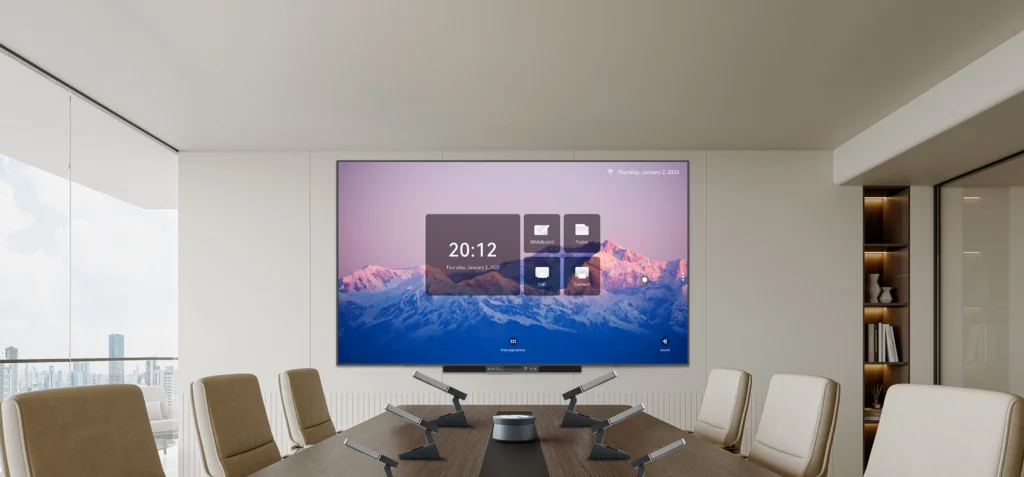
How Smart Board Manufacturers Approach the Market
One group consists of established display manufacturers that have expanded into interactive products. Samsung, for example, offers its Flip Pro interactive display with multi-touch, pen and brush modes, USB-C connectivity, and video-call application support. Its approach combines a familiar commercial-display ecosystem with interactive meeting capabilities.
Another group focuses specifically on interactive collaboration. SMART Technologies develops business-oriented SMART Board displays with features such as digital inking, content sharing, and integration with meeting platforms. Its MX Pro series supports Microsoft Teams as well as other major conferencing platforms.
There are also manufacturers that build broader collaboration ecosystems. MAXHUB, for instance, combines interactive flat panels with commercial displays, LED walls, audio-video equipment, software, and Microsoft Teams Rooms solutions. This approach can appeal to organizations seeking coordinated equipment across different meeting spaces.
Comparing Technology Approaches for Conference Room Smart Boards
For buyers, the most important difference is often the technology behind the interactive experience. Traditional interactive flat panels generally combine an LCD display with an integrated touch layer, computing platform, speakers, and connectivity. This makes them relatively straightforward to deploy in conventional conference rooms.
LED-based solutions take a different approach. Instead of relying on a conventional LCD panel, manufacturers can use fine-pitch LED or Micro LED technologies to create large, seamless visual surfaces. This can be particularly attractive for boardrooms, executive spaces, and larger collaboration environments where viewing distance and screen scale matter.
Software is another major differentiator. Some suppliers emphasize their own collaboration applications, while others prioritize compatibility with established platforms such as Microsoft Teams, Zoom, Google Meet, or Windows. Buyers should therefore evaluate both hardware specifications and the software environment their teams already use.
Durability and service infrastructure also matter for commercial installations. Organizations should examine operating requirements, component quality, maintenance options, warranty coverage, and supplier experience rather than comparing purchase prices alone.
Where Ledman Fits Among Global Smart Board Manufacturers
Ledman brings a different technology background to the interactive-display market. Established in 2004, they specialize in LED UHD display technology and COB Micro LED products. Their portfolio covers commercial LED displays, rental displays, sports applications, creative displays, and interactive products for conference and education scenarios.
Their LEDHUB solution applies this LED expertise to interactive collaboration. The product category is built around COB Micro LED display technology and includes features such as NFC functionality, pen-lift detection, and one-touch touch disable. These functions are intended to support professional interactive environments rather than simply provide a large presentation screen.
Ledman also has substantial experience developing COB display technology. Their company information states that they have more than 50 independent COB patents and more than 3,000 COB display projects worldwide. Their history includes the development of touch-interactive COB all-in-one products for smart conference applications.
This background distinguishes Ledman from manufacturers whose primary strength is conventional LCD-based interactive panels. For buyers considering conference room smart boards, an LED-based approach may be worth evaluating when large-format visuals, display durability, and COB technology are priorities.
What Should Buyers Compare Between Manufacturers?
When evaluating smart board manufacturers, businesses should begin with the meeting environment. A compact huddle room may need a different display solution from a large boardroom, training center, or executive collaboration space.
Touch capability should be assessed alongside display technology. Buyers can compare writing response, multi-touch capability, annotation tools, palm rejection, and whether users can interact naturally with documents and presentations.
The software ecosystem deserves equal attention. Compatibility with existing conferencing platforms, operating systems, wireless-sharing tools, and IT-management requirements can influence the total value of a solution. A technically impressive display may still be unsuitable if it creates unnecessary workflow changes.
Finally, consider the manufacturer’s broader capabilities. Companies with established production expertise, international channels, engineering resources, and experience with professional installations may offer advantages when projects involve multiple rooms or require customized configurations.
Choosing the Right Global Supplier
There is no single manufacturer that is ideal for every business. Samsung emphasizes its established display ecosystem, SMART focuses strongly on interactive collaboration and digital inking, and MAXHUB provides a broad portfolio spanning displays, conferencing equipment, software, and LED solutions.
Ledman offers another route by combining interactive meeting functionality with their expertise in COB Micro LED and professional LED displays. For organizations seeking conference room smart boards with an LED-centered technology approach, LEDHUB provides an option worth considering.
The best purchasing decision should ultimately reflect room size, collaboration requirements, display technology preferences, software compatibility, maintenance expectations, and long-term deployment plans. Comparing these factors provides a more useful basis for selecting among global smart board manufacturers than focusing on brand recognition or initial price alone.

