Lighting projects are placing more attention on visual comfort, flexible color control, and cleaner installation results. This is especially noticeable in retail, hospitality, offices, and decorative spaces where lighting needs to support both function and atmosphere. RGB COB LED strips are gaining attention because they combine continuous light output with flexible color changes. They can also simplify the appearance of linear lighting in visible installation areas.
For project planners, the choice is not only about adding color effects. Light uniformity, strip width, efficiency, protection level, and installation conditions also affect the final result. Comparing RGB COB solutions with standard LED strip lights can help buyers understand where COB technology may offer practical value.
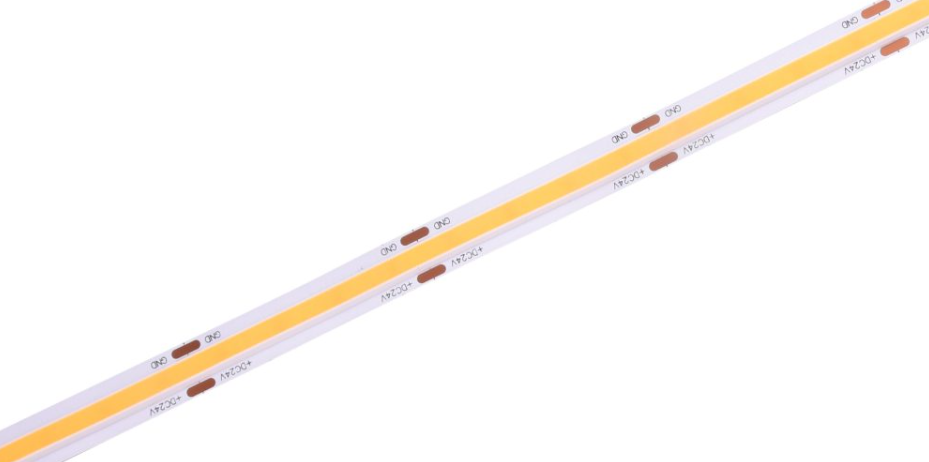
Why Dot-Free Light Matters in Visible Installations
Traditional LED strips use separate light sources positioned at intervals along the PCB. Depending on LED density, diffuser depth, and viewing distance, individual light points may still be visible. This can be noticeable in shallow aluminum profiles, display shelves, furniture lighting, or decorative lines.
COB technology places many light-emitting chips closely together under a continuous phosphor layer. The result is a smoother light line with fewer visible dots. This makes RGB COB strips useful in locations where the light source itself can be seen directly.
Uniform output can also reduce the need for very deep profiles or heavy diffusion. Designers may have more freedom when working with narrow channels, curved details, or compact architectural elements. This is one reason RGB COB strips are being considered in projects that require a cleaner visual finish.
The difference does not mean that standard LED strip lights are unsuitable for project use. They remain practical for many applications, especially where the strip is hidden or installed behind sufficient diffusion. The better choice depends on the mounting method, viewing angle, budget, and required effect.
Color Flexibility Supports Different Project Functions
RGB lighting allows one installation to display different colors according to time, activity, branding, or interior design needs. Retail spaces may use different tones for seasonal displays. Hospitality projects may change lighting scenes between daytime and evening use. Decorative installations can also use programmed color transitions.
This flexibility can reduce the need to install separate colored light sources for different scenes. However, project teams still need to consider controllers, power supplies, wiring, and control protocols during system planning. RGB capability is useful only when the control system matches the intended operation.
COB construction adds another visual advantage because color transitions appear more continuous along the strip. When the strip is exposed inside a profile or decorative groove, smoother output can create a more consistent appearance.
Color control should still be planned around the purpose of the space. Rapid color changes may suit entertainment settings, while offices and residential areas usually require more restrained lighting scenes. RGB COB strips give designers more options, but the final settings should match how the space will actually be used.
Efficiency Still Matters in Project Evaluation
Visual quality is important, but energy performance remains part of B2B lighting decisions. Project buyers often compare lumen output, power consumption, heat management, and expected operating hours before approving a lighting system.
A high efficacy LED strip can produce more useful light for the electrical power consumed. This can matter in larger installations where many meters of strip lighting operate for long periods. Efficiency also influences power supply sizing and thermal conditions inside profiles.
However, efficacy should not be reviewed alone. Color rendering, waterproof construction, strip width, voltage drop, and installation environment can all affect project suitability. A specification that looks attractive on paper may still require changes once installation details are considered.
For this reason, lighting contractors and designers often compare complete technical requirements rather than focusing on a single number. A high efficacy LED strip should fit the expected brightness, color quality, mounting method, and operating environment of the project.
Product Design Can Affect Installation Choices
When project requirements call for narrow, continuous linear light, product structure becomes important. This is where manufacturers such as LEDIA Lighting can be introduced as part of the supplier evaluation process rather than as the main focus of the project.
Their COB Free Cut Series is designed with uniform, dot-free light and a super-narrow structure. The series offers CRI80+, CRI90+, and CRI95+ options. For CRI90+ versions, efficacy can reach up to 120 lm/W according to the provided product information.
The range also includes IP20, IP65, IP67, and IP68 waterproof options. These choices allow project teams to select protection according to indoor, damp, or more demanding installation conditions. The product is intended for office, residential, retail, and decorative lighting applications.
Another practical point is the three-year warranty. Free-cut capability can also support installation planning where project dimensions vary, although cutting and connection methods should still follow the product instructions and electrical design requirements.
Project Conditions Should Guide the Final Choice
RGB COB strips are not automatically the right solution for every linear lighting project. Buyers should first review the visible lighting effect, required colors, profile dimensions, control method, waterproof level, and maintenance access.
Projects with exposed light lines may benefit more from COB’s smooth appearance. Applications hidden behind deep diffusers may have fewer visual reasons to switch. Cost, installation complexity, and control requirements also need to be reviewed together.
Supplier communication becomes more important when projects require specific CRI levels, narrow dimensions, waterproof construction, or custom control arrangements. LEDIA Lighting offers COB products that can be evaluated against these technical needs, while buyers should still match the selected configuration with their own project drawings and operating conditions.
RGB COB LED strips are attracting more project interest because they combine continuous light, color flexibility, compact dimensions, and multiple protection options. Their value is strongest when these features solve a real installation or visual requirement. Careful comparison of efficiency, controls, mounting conditions, and long-term use can help project teams decide whether COB technology fits the application.

